Irresistible Japanese Katsu Curry: Comfort Food Redefined
Last Updated on March 13, 2026 by Carolina
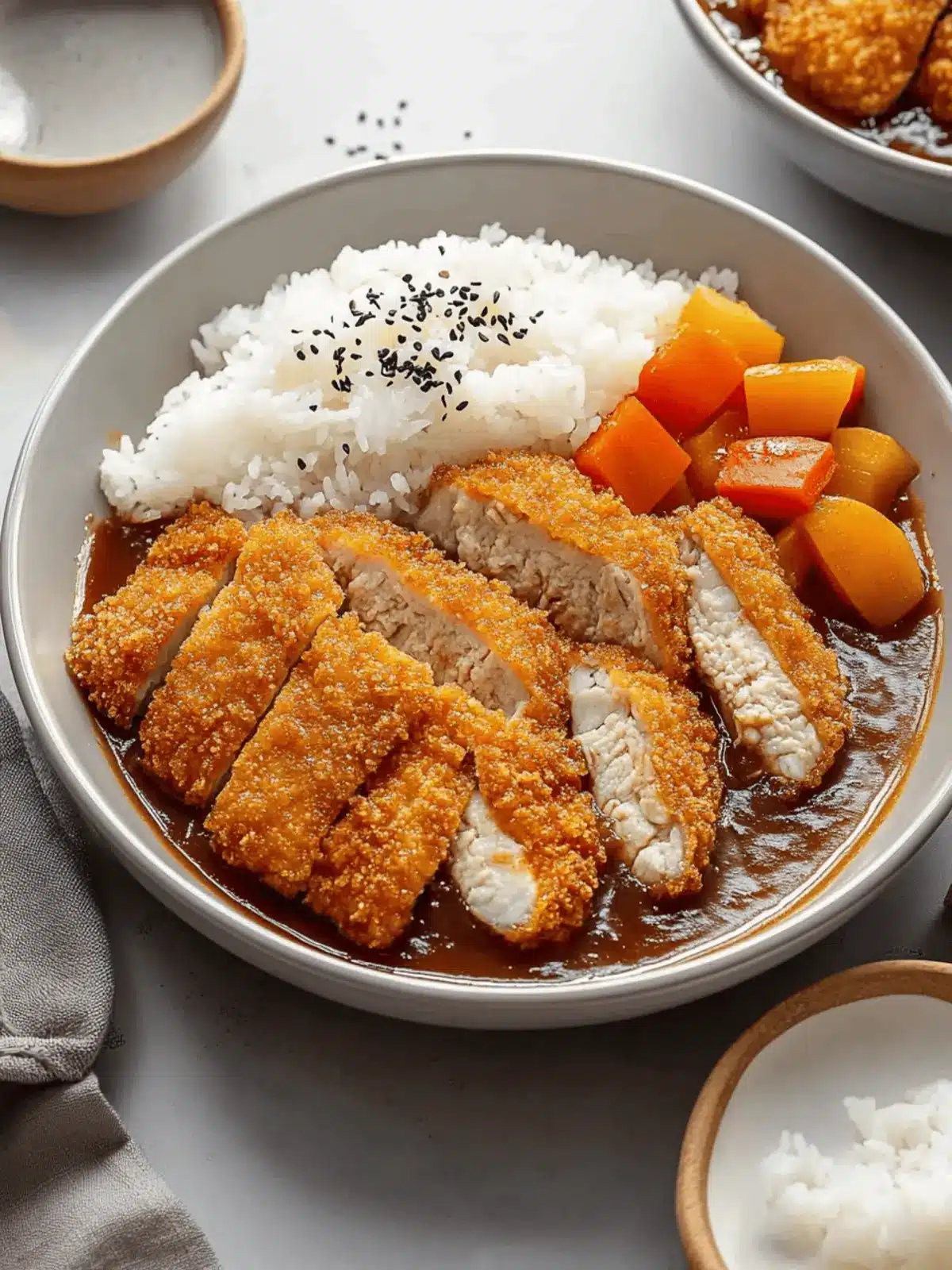
You know those evenings when you crave something comforting yet exciting? That s exactly how I felt when I first discovered the delightful duo of Chicken Katsu with Japanese Curry. Picture this: tender chicken breasts, lovingly coated in crispy panko, paired with a rich, aromatic curry that warms your soul. This dish captures the perfect blend of textures and flavors, making it a meal that even the pickiest eaters will adore.
While searching for inspiration in my kitchen, I happened upon some pristine ingredients just waiting to be transformed into something extraordinary. The interplay of savory and sweet from the curry roux and the crispiness of the chicken is a working home chef s dream. Not only is it a feast for the taste buds, but it s also a breeze to prepare ideal for any day of the week when fast food just won t cut it. So let s dive into this delicious adventure and bring a taste of Japan right to our dining table!
Why is Japanese Katsu Curry a must-try?
Comforting and fulfilling, this dish embodies everything you crave in a satisfying meal.
Crispy chicken enveloped in panko delivers a delightful crunch, harmonizing flawlessly with the rich curry sauce that s both comforting and fragrant.
Quick preparation means you can whip this up on a busy weeknight, making it a perfect alternative to fast food.
Crowd-pleaser: Whether you re cooking for family or friends, everyone loves a good katsu curry!
Unique flavors come from the unique blend of sweet apple and savory soy sauce, delivering a taste sensation that s hard to forget.
With its versatile ingredients, this recipe allows you to experiment with various vegetables and sides, tailoring it to your preferences!
Japanese Katsu Curry Ingredients
For the Chicken
Boneless skinless chicken breasts the foundation of your crispy katsu, tender and juicy when cooked right.
Salt enhances the chicken s natural flavor.
Black pepper adds a touch of warmth and depth.
All-purpose flour helps the egg and panko adhere perfectly to the chicken.
Egg acts as a binder for the breadcrumbs.
Panko breadcrumbs delivers that coveted crispy texture, perfect for a satisfying crunch.
For the Curry
Vegetable oil provides the frying medium for the chicken katsu; use a high smoke point oil.
Japanese curry roux the star of your dish, providing the rich, savory flavor essential to Japanese Katsu Curry.
Yellow onion adds a sweet, aromatic base to the curry.
Russet potato lends creaminess and heartiness when cooked.
Carrot introduces a natural sweetness to balance the dish.
Olive oil used in the curry preparation, providing a smooth texture.
Garlic infuses the curry with aromatic depth.
Red apple imparts a hint of sweetness that harmonizes beautifully with the savory elements.
Chicken stock enhances the overall flavor profile of the curry.
Water adjusts the consistency of the sauce.
Soy sauce adds umami richness to the curry.
Honey a sweet touch to season the sauce just right.
Cooked white rice the perfect companion for soaking up all that delicious curry!
How to Make Japanese Katsu Curry
- Butterfly the chicken breasts carefully by slicing them horizontally, leaving one side intact. This technique helps create a tender, evenly cooked katsu.
- Tenderize the chicken by flattening it gently to about ½ inch thick, then season both sides with salt and pepper, ensuring each bite is flavorful.
- Prepare three shallow dishes: one filled with flour, another with the beaten egg, and the last one containing panko breadcrumbs for a luscious crust.
- Coat the chicken by patting it dry, then dredge both sides in flour, dip in the beaten egg, and finally press into the panko breadcrumbs for that perfect crunch.
- Heat vegetable oil in a medium-sized deep pan over medium-high heat until it reaches 340 °F (170 °C). This temperature ensures your katsu gets beautifully crispy.
- Fry one coated chicken katsu in the hot oil for 3 minutes, then flip it and cook for an additional 3-4 minutes until golden brown. Let it cool on a wire rack before slicing into strips.
- Prepare the vegetables by peeling and dicing the potato and carrot into 1-inch pieces; soak the potato in water for 10 minutes to maintain its texture.
- Saut the onion and garlic in a medium pot with olive oil over medium heat until they turn lightly browned and fragrant, about 3-4 minutes.
- Add the carrot to the pot and mix, cooking on medium-high for about 2 minutes until they begin to soften.
- Incorporate the diced potatoes, continuing to cook and mix thoroughly for another 2 minutes, blending the flavors beautifully.
- Pour in the chicken stock, water, soy sauce, honey, and grated apple. Bring to a boil, reduce heat to medium-low, cover, and let it simmer until the potatoes and carrots are tender, about 15 minutes.
- Stir in the Japanese curry roux gently until it s fully blended, then simmer on medium-low heat for another 15 minutes until the sauce thickens, stirring occasionally for a smooth finish.
- Serve the sliced chicken katsu over a fluffy bed of rice, generously topping it with heaps of the rich Japanese curry for a delightful, heartwarming meal.
Optional: Garnish with chopped green onions for a fresh touch.
Exact quantities are listed in the recipe card below.
What to Serve with Japanese Katsu Curry?
Elevate your dining experience with delightful side dishes that enhance the comforting flavors of this Japanese classic.
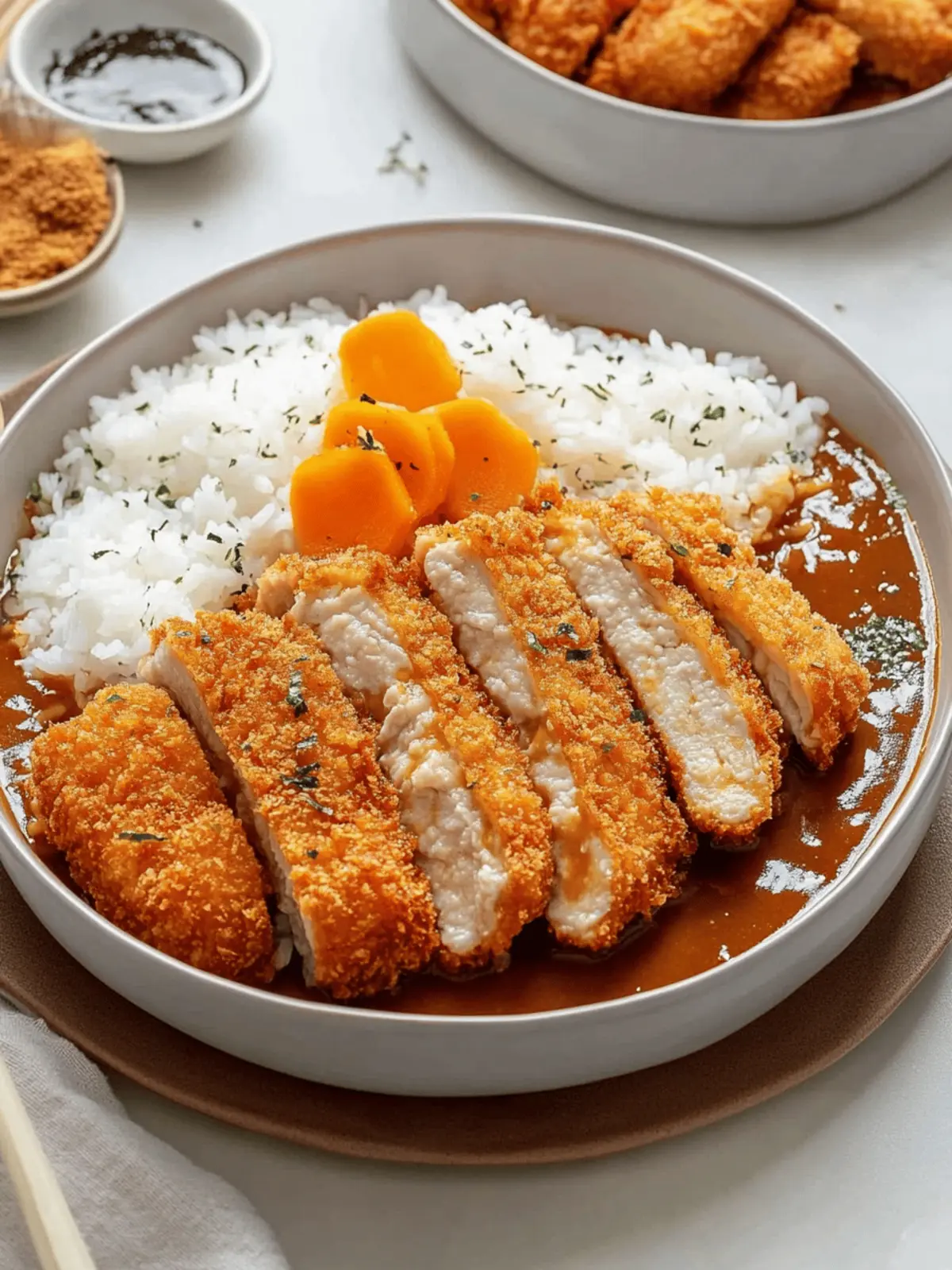
Fluffy White Rice: The perfect base for soaking up that rich curry nothing beats the combination of sweet and savory sauces drenching your rice.
Steamed Broccoli: Offers a fresh, crunchy contrast to the crispy katsu and adds a pop of vibrant color to your plate.
Miso Soup: A warm, umami-rich soup perfectly complements the dish and adds an authentic Japanese touch to your meal experience.
Pickled Vegetables: Sharp, tangy pickles provide a palate-cleansing burst that balances the hearty flavors of the curry beautifully.
Cucumber Salad: Fresh cucumbers tossed in sesame dressing lend a refreshing crunch that cuts through the richness of the katsu.
Sesame Noodles: Cold noodles tossed in a sesame sauce offer an exciting twist, making a great companion while enhancing the meal s flavor profile.
Japanese Green Tea: An earthy beverage that cleanses your palate while pairing seamlessly with the sweet-spicy notes of the curry.
Mochi Ice Cream: End your meal on a sweet note with this chewy dessert, providing a lovely contrast to the savory and crispy katsu!
How to Store and Freeze Japanese Katsu Curry
Fridge: Store leftover Japanese Katsu Curry in an airtight container for up to 3 days. Simply reheat on the stovetop or microwave until warmed through.
Freezer: For longer storage, freeze the curry in a freezer-safe container for up to 2 months. Thaw overnight in the fridge before reheating for best results.
Chicken Storage: If you have leftover chicken katsu, keep it in a separate airtight container in the fridge for up to 3 days to maintain its crispy texture.
Reheating: To regain the crunch, reheat chicken katsu in the oven at 375 °F (190 °C) for about 10 minutes rather than the microwave, which can make it soggy.
Expert Tips for Japanese Katsu Curry
Chicken Prep: Ensure your chicken is evenly tenderized for consistent cooking. Uneven pieces may lead to dry spots.
Panko Perfection: Press the panko breadcrumbs firmly onto the chicken to ensure a nice crispy crust that stays intact during frying.
Oil Temperature: Use a thermometer to check the oil temperature; frying at the right heat (340 °F or 170 °C) is crucial to achieve that golden crunch without greasy katsu.
Sauce Simmer: Allow the curry to simmer long enough for the flavors to meld; patience enhances the depth of flavor in your Japanese Katsu Curry.
Serving Suggestion: For extra flavor, garnish your curry with chopped green onions or sesame seeds. This adds a delightful freshness to each bite.
Vegetable Variety: Feel free to add other veggies like bell peppers or peas for added nutrition and texture; just ensure they complement the sweet-savory profile of the curry!
Make Ahead Options
These Japanese Katsu Curry components are perfect for meal prep, making busy weeknights a breeze! You can slice and bread the chicken up to 24 hours in advance, then store it in the refrigerator. The curry sauce itself can be prepared up to 3 days ahead; simply cook the vegetables and stir in the curry roux, then let it cool before refrigerating. To serve, just reheat the curry on low and fry the chicken katsu fresh to maintain its crispy texture. This way, you ll have a delicious meal ready with minimal effort, ensuring your homemade favorite is just as delightful any day of the week!
Japanese Katsu Curry Variations
Embrace your inner chef and let your culinary creativity shine with these delightful twists!
Gluten-Free: Substitute all-purpose flour and panko breadcrumbs with gluten-free alternatives like almond flour and cornflake crumbs for a crunchy texture.
Spicy: Incorporate a teaspoon of sriracha or chili paste into the curry for a zesty kick that warms the soul.
Vegetarian: Replace the chicken with thick slices of eggplant or tofu. Prepare them in the same way for a delicious vegetarian alternative!
Creamy: Add a splash of coconut milk to the curry for a luscious, creamy consistency that enhances the flavors beautifully.
Extra Veggies: Toss in additional vegetables such as bell peppers or snap peas for added color, nutrition, and a delightful crunch.
Crispy Chicken Alternative: For an even crispier bite, double-fry the chicken first cook until golden, then let it sit before frying again for a super-crunchy texture.
Apple-Free: If you d like a deeper curry flavor, you can omit the apple and increase the volume of your onions or add a touch of brown sugar for sweetness.
Rice Alternatives: Rather than white rice, serve the curry over fluffy quinoa or barley for a unique texture and flavor profile that nourishes and delights.
Japanese Katsu Curry Recipe FAQs
What type of chicken is best for Japanese Katsu Curry?
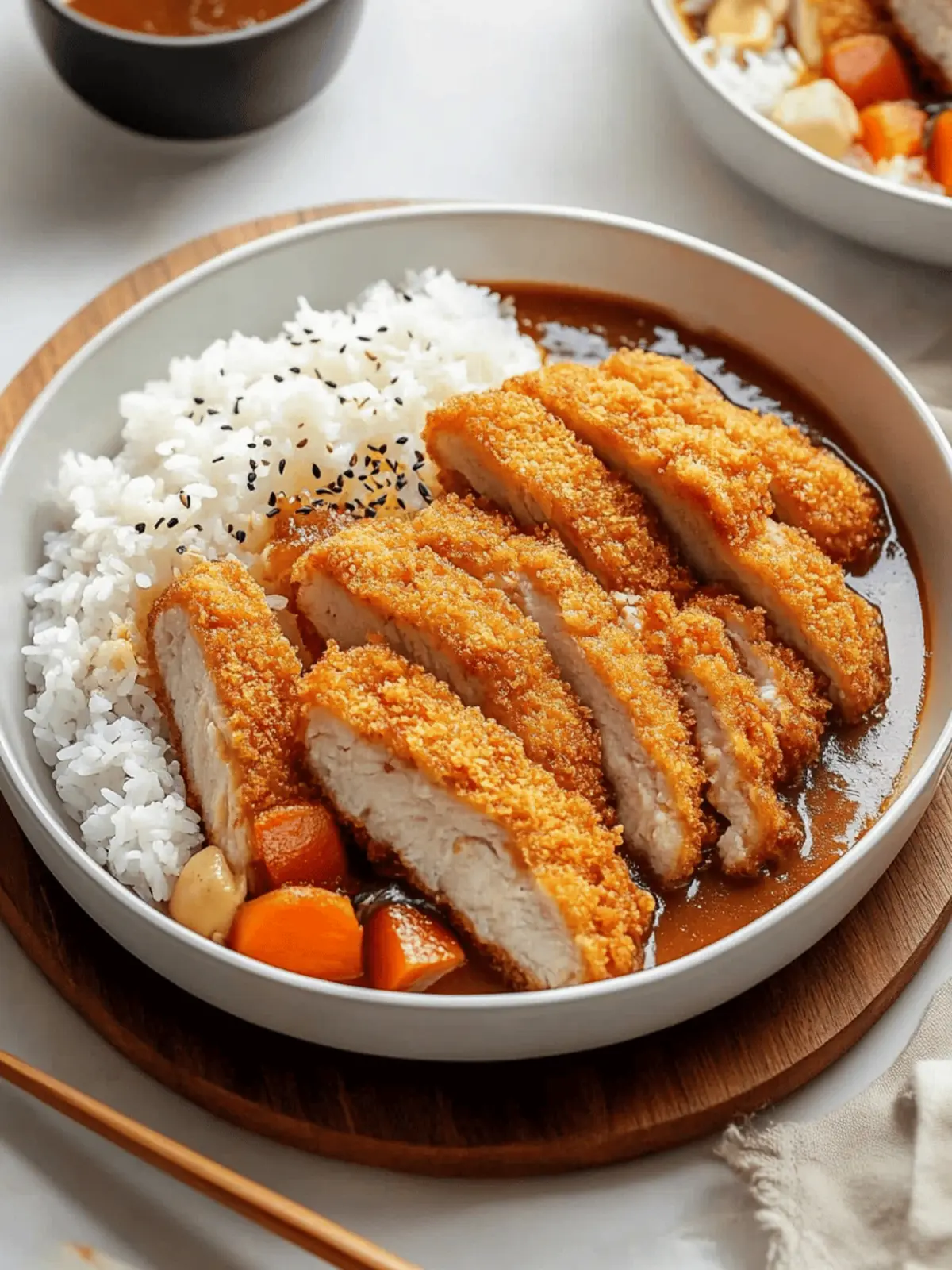
Absolutely, boneless, skinless chicken breasts work best for this dish. They re tender and can easily be butterflied and flattened for even cooking. If you prefer dark meat, chicken thighs can also be a delicious alternative!
How should I store leftover Japanese Katsu Curry?
After enjoying your meal, store any leftovers in an airtight container in the refrigerator for up to 3 days. For a quick reheat, the stovetop is best just warm on low heat until heated through. If you re in a hurry, microwaving will work too, but you ll want to keep an eye on it to avoid overcooking.
Can I freeze Japanese Katsu Curry?
Very! To freeze your curry, ladle it into freezer-safe containers, leaving some space at the top for expansion. It ll be good for up to 2 months. When you re ready to enjoy it, thaw overnight in the fridge and reheat on the stove for a comforting meal.
How do I keep the chicken katsu crispy when reheating?
To maintain that delightful crunch, reheat the chicken katsu in the oven. Preheat your oven to 375 °F (190 °C), place the chicken on a baking sheet, and warm for about 10 minutes. This method helps revitalize the crispiness, unlike the microwave which can make it soggy.
What should I do if my curry is too thick?
If you find your curry has thickened more than you d like, simply stir in a little chicken stock or water. The texture should be creamy but not overly thick. Heat it gently while stirring until it reaches your desired consistency this will keep your flavors on point without losing that luscious sauce!
Are there any dietary considerations for Japanese Katsu Curry?
Absolutely! If you re concerned about gluten, consider using gluten-free panko breadcrumbs and a gluten-free soy sauce. Additionally, check the curry roux for any allergens, as some brands may contain wheat or other potential allergens. If you re vegetarian, try substituting chicken with sturdy veggies or tofu and use vegetable stock instead!